
IC-SS
MATERIAL INTELLIGENCE
From Drawing to Decision.
Better Materials. Smarter Decisions.
AI-supported material intelligence for a more sustainable built environment.
IC-SS is an emerging technology platform connecting material knowledge, environmental performance, technical specifications, and supply-chain information to support better decisions in architecture, landscape architecture, and urban development.
Our ambition is to make material selection more transparent, comparable, and informed from the earliest design stages to procurement.
The Challenge
Material decisions are becoming increasingly complex.
Every material choice affects the environmental footprint, performance, cost, and long-term quality of our built environment.
Yet essential information remains fragmented across manufacturers, technical documents, environmental product declarations (EPDs), databases, and supply chains.
Design professionals must balance multiple requirements — often without a unified basis for comparison.
What if we could connect this information and turn it into actionable material intelligence?
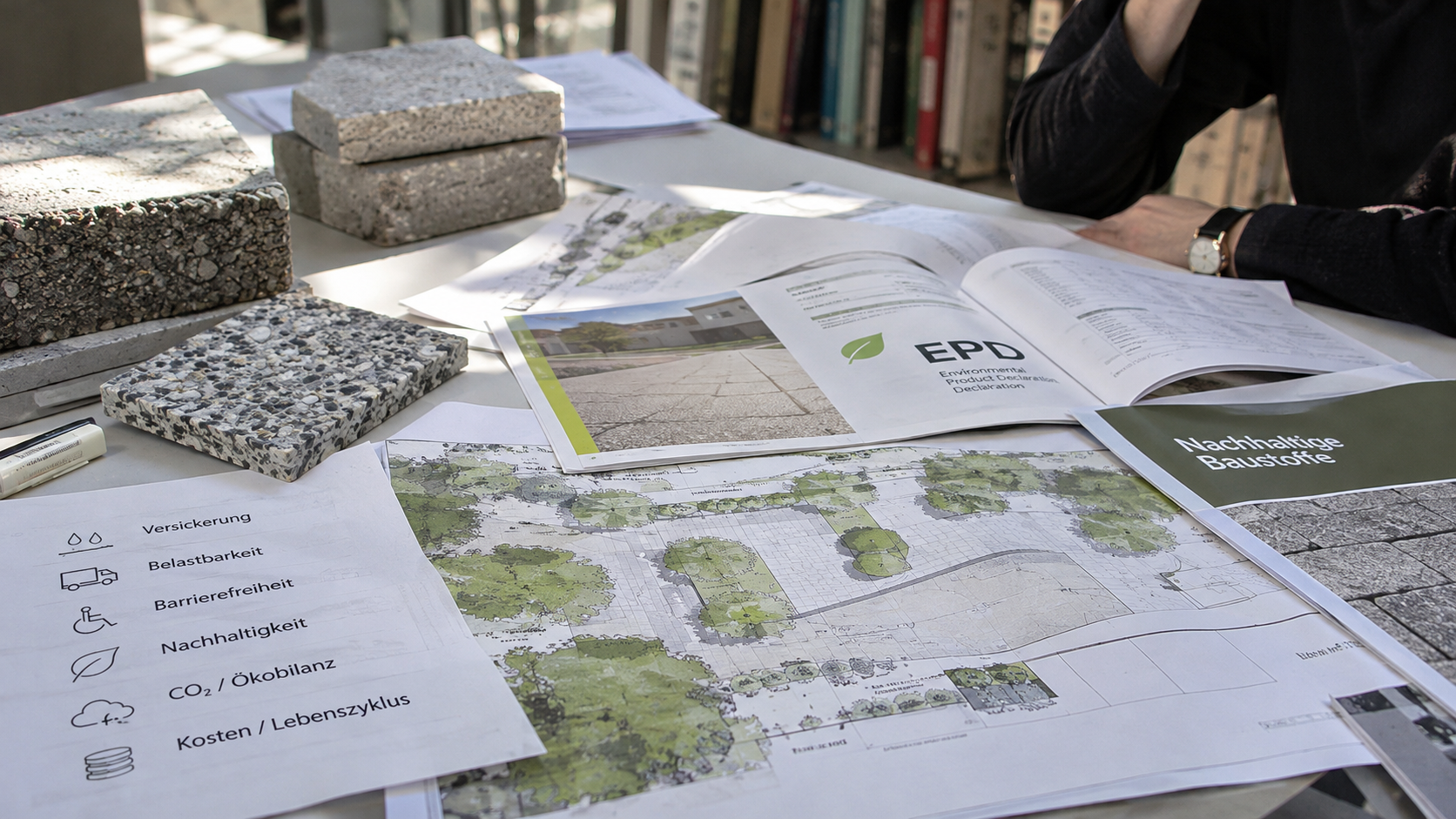
Connecting Design, Data & Sustainability
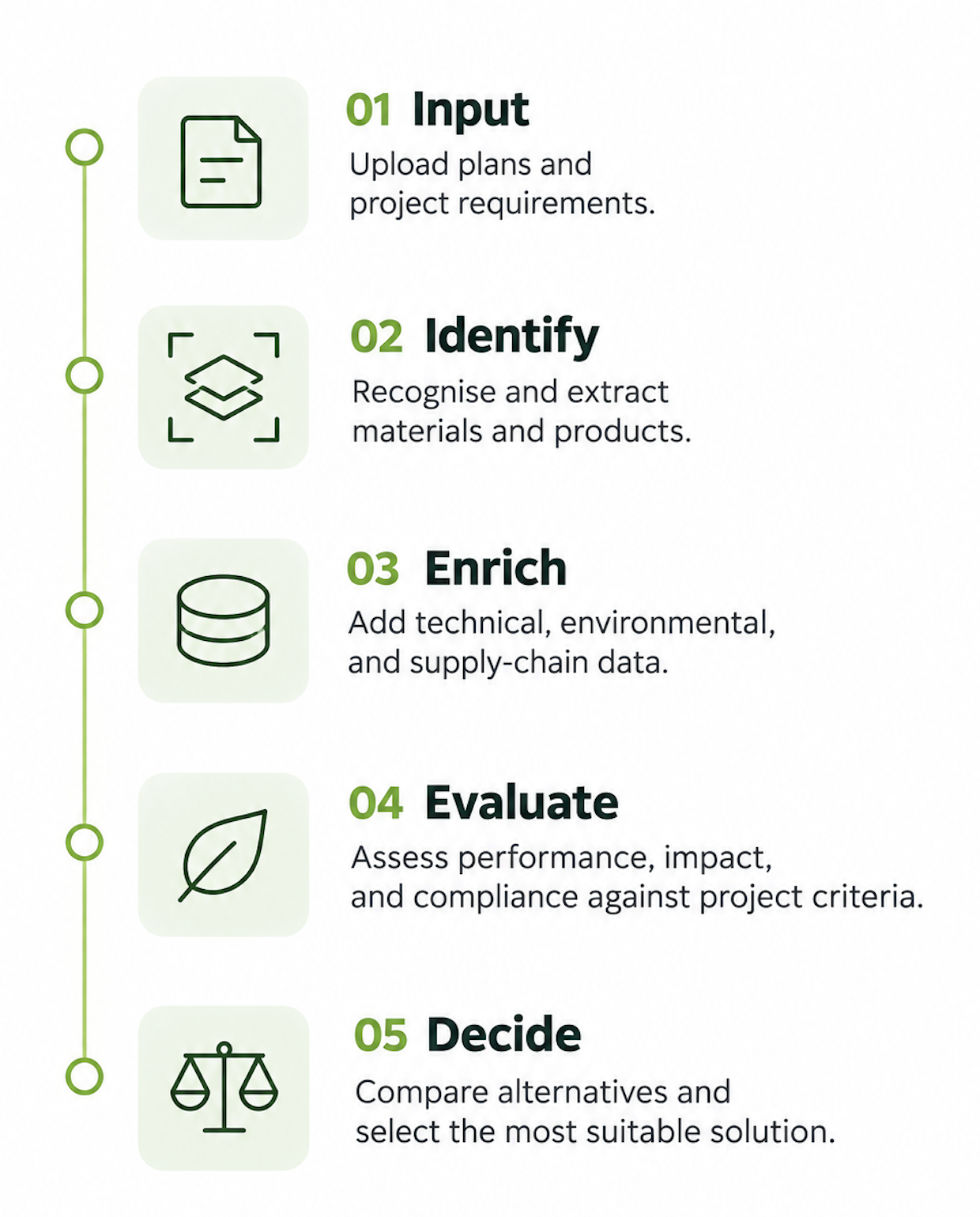
IC-SS is being developed to bring together five essential dimensions of material decision-making:
01 — Material Recognition
Exploring AI-assisted identification of materials and products from architectural drawings and planning documents.
02 — Technical Performance
Connecting material properties with application requirements, including durability, accessibility, water permeability, and load-bearing performance.
03 — Environmental Intelligence
Integrating environmental product declarations (EPDs), life-cycle assessment (LCA), embodied carbon, and circularity indicators.
04 — Supply-Chain Transparency
Connecting product information with manufacturers, suppliers, sourcing options, and material traceability.
05 — Informed Comparison
Supporting the evaluation and ranking of material alternatives against project-specific design, technical, environmental, and economic criteria.
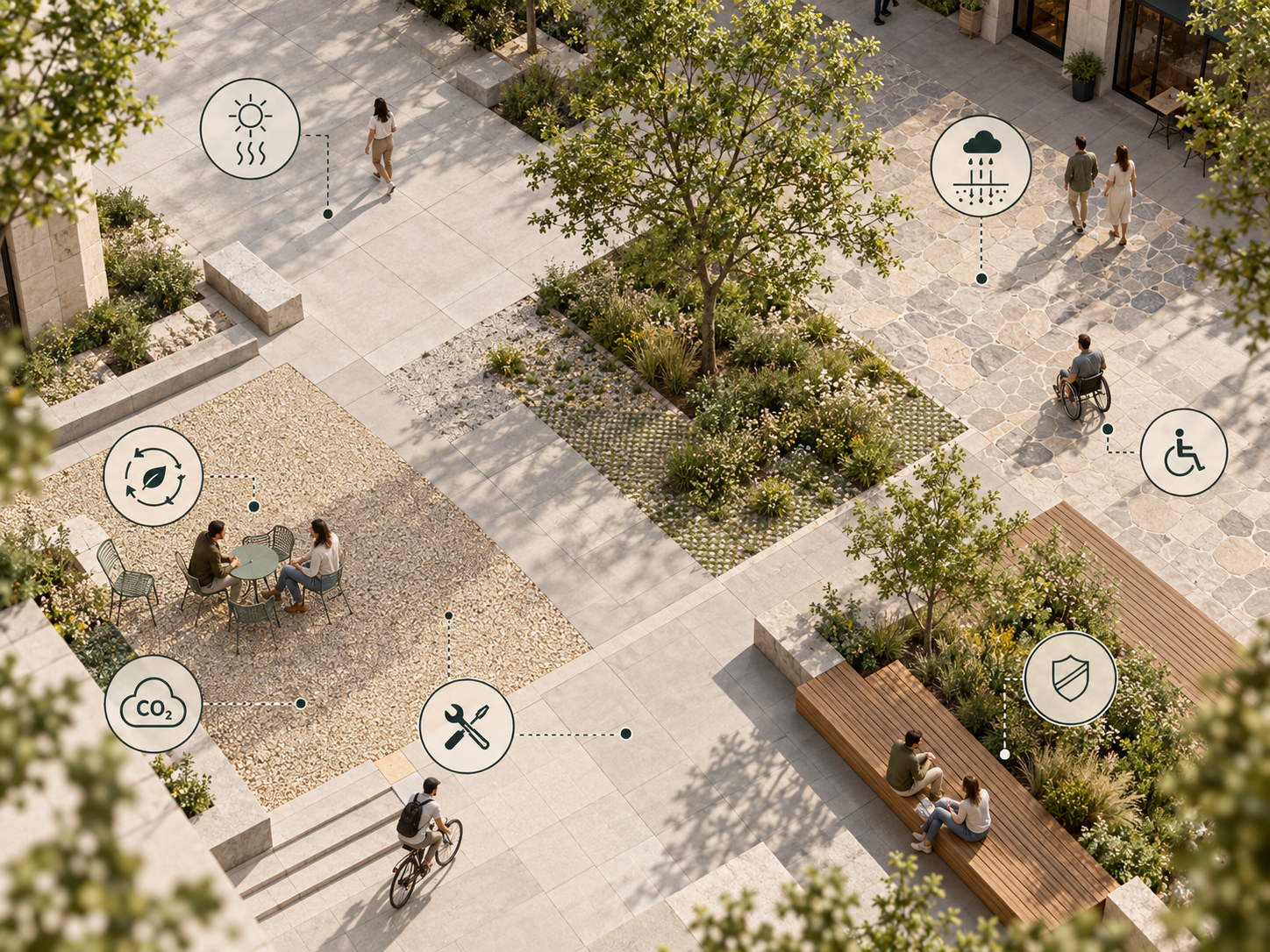
The Public Realm as a Living Laboratory
Our initial focus is landscape architecture and public space, where material decisions must respond to interconnected challenges:
Climate adaptation and stormwater management
Accessibility and inclusive design
Durability and operational requirements
Embodied carbon and environmental performance
Aesthetic quality and long-term value
Through real material examples and professional exchange, we are exploring how digital intelligence can support more informed choices in everyday planning practice.

Research & Industry Collabration
Academic & Research Collaboration

Digital Material Data Collaboration

Industry Collaboration